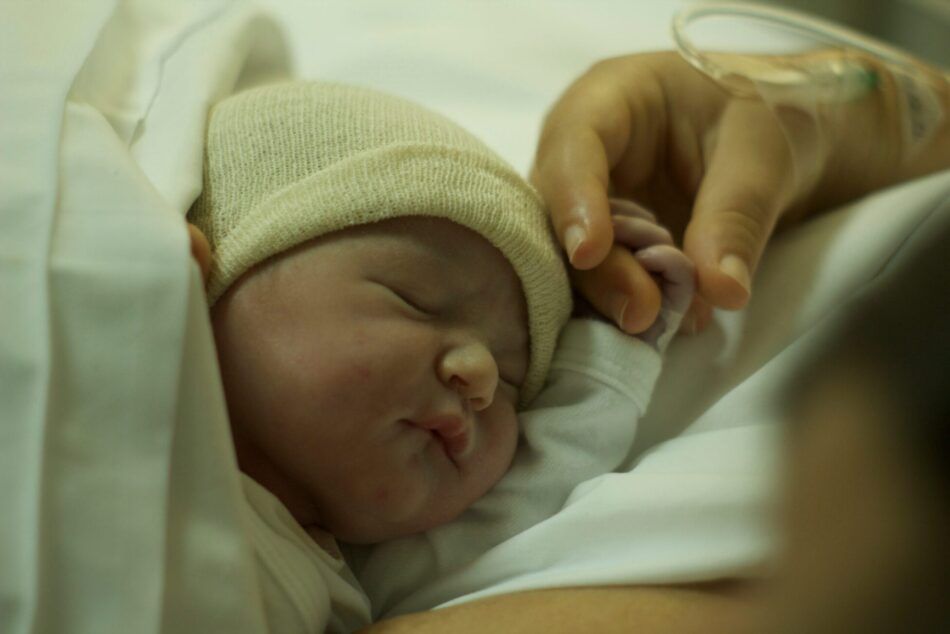
Doulas Can’t Fix a Broken Maternity Care System
—A perspective from a doula trainer
In recent years, something important has happened.
Doulas have become more visible, more respected, more integrated into conversations about improving maternity care—and for the first time, our services are beginning to be reimbursed by insurance.
And with that recognition… something else has quietly crept in: An expectation that doulas will somehow fix what is not working in the maternity care system. Let me say this clearly: as someone who has been a doula for 26 years and trains doulas, I deeply believe in our impact.
But…Doulas Can’t Fix a Broken Maternity Care System
Doulas Eemregence and Our Role
Doulas emerged in the 80s in response to the Social and medical context of childbirth support: in-hospital maternal care isolated birth givers, relied more and more on technology, and was provided by authoritative experts instead of the relationship-centered maternal care provided by community midwives. ( Morton & Clift, Birth Ambassadors, 2014) In this changing context, doulas were expected to provide:
- Continuous emotional and physical support to increase birth givers’ coping levels
- A grounded, attentive presence
- Support navigating complex decisions
- Advocacy through evidence-based knowledge
We know—through both research and lived experience—that doulas improve outcomes and experiences. We are proud of that. We stand behind that.
But when the maternity care system is broken, doulas can’t be the solution.
What Our Clients Believe We Can Do
Let’s name something honestly—because it matters.
When clients hire doulas, many come with a very specific hope… sometimes even an expectation:
- “We want to avoid a cesarean.”
- “We don’t want to be pushed into unnecessary interventions.”
- “We need you to advocate for us so that […] doesn’t happen.”
These desires make complete sense. Families are walking into a system they don’t fully trust. They’ve heard stories. They’ve seen statistics. They’re trying to protect their experience, their bodies, their babies. And so they turn to doulas as a kind of safeguard. A buffer. Sometimes even a shield.
And while we absolutely support our clients in navigating decisions, asking questions, and staying connected to their values—
- Doulas cannot control clinical caregivers’ decisions during childbirth
- Doulas cannot override hospital systems.
- We cannot guarantee that a cesarean—or any intervention—won’t happen.
Not because we aren’t skilled or knowledgeable enough, but because those decisions are part of a much larger system. Because a real change in maternal care systems requires policy shifts, system redesign, workforce investment, expanded access to midwifery care, structural accountability, and interpersonal skills, doulas cannot be the solution.
The narrative shifted from: “Doulas improve care” to “Doulas will compensate for what’s broken.”
What the System Expects Us To Do
But here’s the problem: Somewhere along the way, the narrative shifted from “Doulas improve care ” to “Doulas will compensate for what’s broken.” And that’s where the burden becomes unrealistic—and frankly, unfair. In many cases, doulas are filling emotional, relational, and even informational gaps that should never have existed in the first place.
Doulas are being asked (directly or indirectly) to buffer:
- Overworked and understaffed maternity care systems
- Lack of continuity of care
- Limited prenatal appointment times
- Systemic bias and disparities in treatment
- Emotional gaps and relational barriers in provider-patient relationships
Let’s stop placing unrealistic expectations on doulas and create space for real, systemic solutions to emerge.
The Invisible Cost to Doulas
When doulas are expected to “hold it all,” something happens: We stretch, overextend, and take on emotional labor that belongs to a system—not an individual. And many burn out.
As a doula trainer, I see this all the time: Deeply committed, heart-led professionals who begin to feel responsible for outcomes that are far beyond their scope or control. This is not sustainable.
A More Honest—and Powerful—Position
So where does that leave us?
Right here:
- We will do our absolute best to support families.
- We will continue to bring skill, presence, and transformative care into birth spaces.
- We will advocate, educate, and elevate the standard of support.
And most importantly—
We will empower families to challenge, question, and ultimately transform the maternity care system by demanding better.
- We will focus on prenatal empowerment skills so we won’t carry the responsibility of fixing maternity care for our clients.
- We will engage in client-centered relationships so that our clients will expect it from their medical caregivers.
- We will not position ourselves as experts, so they get to claim this position in their encounters with medical caregivers.
The Invitation
Let’s stop placing unrealistic expectations on doulas and create space for real, systemic solutions to emerge. We can’t do it directly within the maternity care system because we are outsiders to it. But we can play a powerful role in shaping what comes next.
We can empower our clients to expect, question, and demand the change that maternity care so urgently needs.
Imagine future clients navigating their perinatal journey with confidence, autonomy, and agency—grounded in their own inner clarity and supported to use their voice with strength and discernment. This is possible through true perinatal empowerment.
Our students in the Transformational Perinatal Coaching Program witness this shift every day.
We’d love to have you join our upcoming cohort and learn these empowering coaching skills.
- Medicaid is Rewriting the Doula Role—And Most Doulas are Missing it - April 28, 2026
- Doulas Can’t Fix a Broken Maternity Care System - April 10, 2026
- The Body is Ready, The Baby is Spun… What About Your Clients’ Mindset - December 27, 2025